

Better-informed production decisions. More reliable delivery

A changed order, late material or quality issue can affect several teams. ActelosAI starts with a specific manufacturing problem, connects planning, engineering, supply and shop-floor data, and helps identify AI applications whose impact can be tested in everyday work.

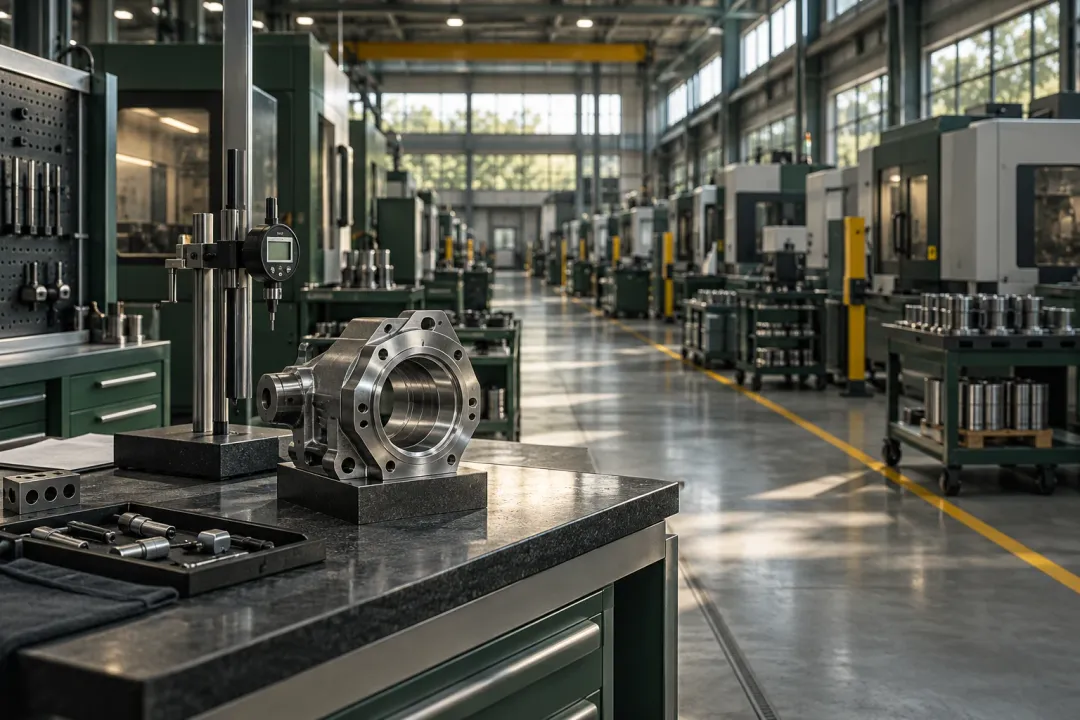
AI-generated manufacturing illustration: a precision component on an inspection bench, with an organized factory floor behind it

Connect the plan with what happens on site

Plenty of stock may still leave an order short of parts. Busy equipment can hide a bottleneck. Higher output may bring more rework. Manufacturing AI needs to connect orders, operations, batches and assets, turning scattered records into decisions teams can check and use in existing workflows.

Choose forecasting, vision, optimization or generative AI according to the task and the business decision it supports.

Reported results from AI and digital applications

Engineering preparation

57%

Shorter design-kit delivery time

A semiconductor manufacturing site using machine learning for design-kit development reported a 57% reduction in design-kit delivery time.

2019–2023 comparison; design-kit delivery time only. Original duration, sample size and AI's isolated contribution were not disclosed.

Original source: UMC ·

Public external example—not an ActelosAI delivery result or a guarantee of comparable improvement elsewhere.

Manufacturing quality

45.9%

Lower finished-goods defect rate

A public case reported a 45.9% reduction in finished-goods defect rate at an automotive camera factory after digital projects that included AI.

Relative defect-rate reduction within a portfolio of 42 digital use cases. Baseline rate, measurement period and AI's isolated contribution were not disclosed.

Original source: WEF ·

Public external example—not an ActelosAI delivery result or a guarantee of comparable improvement elsewhere.

Energy and maintenance

8%

Lower energy use in a predictive application project

An agrifood producer's AI project for energy and maintenance prediction reported 8% lower energy use. The application had been deployed across 11 production sites.

Eleven sites describes deployment, not a confirmed common measurement scope. Measurement period, measured sites and production normalization were not disclosed.

Original source: Microsoft MIMA ·

Public external example—not an ActelosAI delivery result or a guarantee of comparable improvement elsewhere.

These are public external examples. Actual improvements depend on each client’s operating conditions and implementation.

Six manufacturing tasks to start from

Start with one product family, line, critical asset or project. The responsible people confirm planning changes, engineering changes, quality release and site operations.

01

Planning and delivery

See which orders need attention first

Compare scheduling and rush-order options using order commitments, demand changes, work in progress and resource calendars. Forecasting and optimization models handle quantities and constraints. AI organizes exception evidence so planners can assess delivery risks, expediting costs and effects on other orders.

View data, outputs and measures
Connected data
Orders and original commitments, demand history, process routes, work in progress, resource calendars, changeover and inspection constraints
Practical output
Delivery risks, feasible planning options, resource conflicts and conditions to confirm
Measures to watch
On-time delivery against original commitments, schedule attainment, WIP cycle time, expediting costs
02

Materials and inventory

Distinguish shortages from stock mismatches

Connect material requirements, usable stock, reservations across orders and supplier commitments to identify genuine shortages and duplicate allocations. AI checks supply notes and change records, preparing options for follow-up, reallocation or substitution for planning, procurement and quality teams to confirm.

View data, outputs and measures
Connected data
Effective BOMs or recipes, stock quality status and ownership, reservations, inbound supply, supplier commitments and substitution rules
Practical output
Shortages by order or batch, expected availability dates and allocation or substitution options for review
Measures to watch
Material readiness at planned start, material-related stoppage time, obsolete stock value, expedited purchasing costs
03

Engineering changes and process knowledge

Check the impact before a change takes effect

Compare effective versions of drawings, BOMs, recipes and work instructions to trace effects on purchasing, work in progress, processes and acceptance. AI helps extract differences, retrieve experience and draft instructions. Engineers confirm the scope, risks and conditions for the change to take effect.

View data, outputs and measures
Connected data
Approved drawings, BOMs or recipes, change requests, effective dates, work orders, stock, current procedures and experience records
Practical output
Version differences and affected work, documents to update, approval and site confirmation points
Measures to watch
Change review time, missed critical impacts, use of incorrect versions, change-related rework
04

Quality inspection and investigation

Detect deviations earlier and assemble evidence faster

Combine vision inspection or anomaly models with batch, operation and inspection records to flag quality signals. AI organizes events, supporting evidence and possible causes so quality and process teams can plan validation and track false alarms, missed defects and corrective action.

View data, outputs and measures
Connected data
Images or sensor signals, serial numbers or batches, process parameters, inspection, material and maintenance records
Practical output
Exceptions for review, evidence timelines, cause hypotheses and additional inspection suggestions
Measures to watch
Detection and investigation time, false-positive and false-negative rates, first-pass yield at the same operation, rework and scrap
05

Maintenance planning

Turn equipment signals into maintenance that can be scheduled

Assess abnormal signals and production effects using equipment condition, failure history, work orders and spare-parts availability. Predictive models flag potential failures. AI brings together repair knowledge and maintenance requirements so teams can plan checks and windows with site specialists.

View data, outputs and measures
Connected data
Asset identity and criticality, condition signals, failure and maintenance records, spares, skills and production or maintenance calendars
Practical output
Assets to inspect, failure evidence and diagnostic suggestions, preparation needs and window conflicts
Measures to watch
Unplanned downtime, false and missed alerts, mean time to repair, total maintenance cost
06

Process yield and energy

Compare process options while protecting good output

Compare material yield and specific energy use by product, feedstock and operating conditions. Analytics and optimization models evaluate options, while AI connects shift logs, laboratory results and maintenance notes. Process teams use this evidence to design tests within quality, load and safety constraints.

View data, outputs and measures
Connected data
Material inputs, outputs and composition, good output, energy meters, operating conditions, laboratory results, shift logs and valid process limits
Practical output
Differences under comparable conditions, factors to test and proposals for reviewing trials or operating adjustments
Measures to watch
Material yield on a consistent basis, energy per unit of good output, quality deviations, relevant unit product cost

Assess delivery, cost and site execution together

Delivery and inventory

Check whether original commitments are met alongside work in progress, finished stock and expediting costs to understand the cost of better delivery.

Quality and unit cost

Compare good output, rework, materials and energy under comparable product and operating conditions to see whether improvements reduce unit cost.

Time from decision to action

Track time from detecting an exception to resolving it, including every team's review and rework effort, to see whether work moves forward.

Compare within the same business scope against an actual baseline, retaining quality, delivery and site constraints.

One order, one batch or one critical asset

Design the validation around the conditions at your site

From one recurring exception to a measurable improvement

Choose a recurring problem together and gather the data and handling records available at the time. Compare current practice, rules-based tools and AI on past tasks, then test in a small working scope with clear owners and confirmation points. Record results, errors and additional effort before deciding whether to expand.

Discuss where to start

Different production models need different starting points

One business can use several models. Define the scope by product, order or process stage.

Make to stock and assemble to order

Make-to-stock operations focus on demand, finished inventory and replenishment. Assemble-to-order operations focus on configurations, module reservations and assembly or test capacity.

Make to order and engineer to order

Make-to-order operations focus on order loads, work in progress and delivery commitments. Engineer-to-order projects also connect design changes, long-lead procurement and milestone acceptance.

Batch production

Use recipes, material lots, cleaning and changeovers to compare yield, schedules and batch release conditions while preserving traceability.

Continuous production

Analyze plant conditions, flows, energy and maintenance windows. Distinguish steady operation from transitions and retain existing control and safety boundaries.

Contract manufacturing

Use the contract to establish material ownership, capacity allocation and delivery or quality responsibilities. Contract work can span production models; costs and returns follow the agreed scope of responsibility.

Bring relevant experience to a specific problem

Draw on experience in industrial strategy, organizational coordination and global supply chains to discuss manufacturing transformation priorities and the conditions for delivery.

Henry Chen

Henry Chen

Core Partner, Consulting Lead

Bring experience in advanced manufacturing, industrial automation and global supply chains to discussions of transformation priorities, organizational coordination and delivery conditions.

Explore the expert's experience

Start with a real manufacturing problem

Bring a delivery, quality, equipment or cost issue. Together, we can clarify current practice, available data, accountable owners and measures, then define an AI application worth testing.